
American Civil War: The Truth History Books Skipped
The American Civil War remains one of the most discussed yet misunderstood events in United States history. Most people learn a simplified version in school: the war happened because of slavery, the North fought the South, and freedom eventually prevailed. While this explanation contains truth, it leaves out critical layers of political tension, economic rivalry, constitutional conflict, and human fear that ultimately tore the nation apart.
This article explores what history books often skip—not to deny the central role of slavery, but to explain why the conflict became inevitable, how decisions were made, and why the war’s consequences still shape America today.
America Before the War: Two Nations Growing Apart
By the mid-19th century, the United States was technically one country, but in reality, it was developing into two very different societies.
The Northern States
The North was rapidly industrializing. Factories, railroads, and urban centers expanded. Wage labor became the norm, immigration increased, and the economy diversified into manufacturing and trade.
The Southern States
The South remained largely agricultural. Its economy depended heavily on plantation farming—especially cotton. Enslaved labor was not just a social system but the backbone of Southern economic survival.
This economic divide created opposing worldviews. Northern leaders increasingly supported tariffs, infrastructure development, and federal authority. Southern leaders feared that these policies favored Northern interests at their expense.
This tension existed long before gunfire ever began.
Slavery: Central Cause, Not the Only One
There is broad historical consensus that slavery was the core issue behind the American Civil War. However, the conflict was not solely about morality versus immorality—it was also about power.
Southern states feared that restricting slavery would:
Destroy their economy
Reduce their political influence
Threaten their social hierarchy
Northern opposition to slavery was not always rooted in equality. Many opposed its expansion, not necessarily its existence, fearing competition with free labor and imbalance in political representation.
This distinction matters because it explains why compromise repeatedly failed.
The Battle Over New States
Every time the United States expanded westward, one explosive question emerged:
Would the new territory allow slavery or prohibit it?
The balance of power in Congress depended on the answer.
Major compromises attempted to delay conflict:
The Missouri Compromise
The Compromise of 1850
The Kansas-Nebraska Act
Each temporary solution created new resentment. Violence in “Bleeding Kansas” showed that political disagreement had already turned physical.
By the 1850s, compromise no longer worked.
States’ Rights: Principle or Justification?
Southern leaders often claimed the war was about states’ rights. This argument is historically documented but frequently misunderstood.
States’ rights were defended selectively. Southern states supported strong federal authority when it protected slavery (such as enforcing fugitive slave laws) and rejected it when it threatened slavery’s expansion.
This contradiction reveals an uncomfortable truth:
states’ rights were often a means, not the end.
The Election That Changed Everything

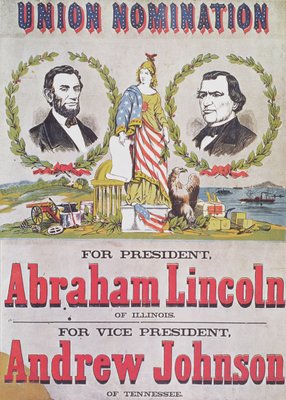
The election of Abraham Lincoln in 1860 was the breaking point.
Lincoln:
Opposed the expansion of slavery
Did not campaign on immediate abolition
Promised to preserve the Union
Despite this, Southern leaders viewed his election as proof that they had permanently lost national power.
Before Lincoln even took office, Southern states began seceding.
Secession: Fear Over Reality
Between December 1860 and early 1861, eleven Southern states declared secession and formed the Confederate States of America.
Their declarations of secession, which still exist today, clearly cite slavery as a primary concern. This is not speculation—it is documented historical evidence.
Secession was not an act of defense after oppression. It was a preemptive move driven by fear of future loss.
War Begins: Fort Sumter
The war officially began in April 1861 when Confederate forces fired on Fort Sumter in South Carolina.
At this moment, the conflict shifted from political debate to armed rebellion.
Lincoln’s response focused on preserving the Union—not yet on ending slavery.
This distinction is often overlooked but historically verified.
The War No One Expected
Both sides underestimated the scale of the conflict.
Many believed the war would last months
Neither side expected mass casualties
Medical knowledge was limited
Industrial warfare was new
The result was catastrophic.
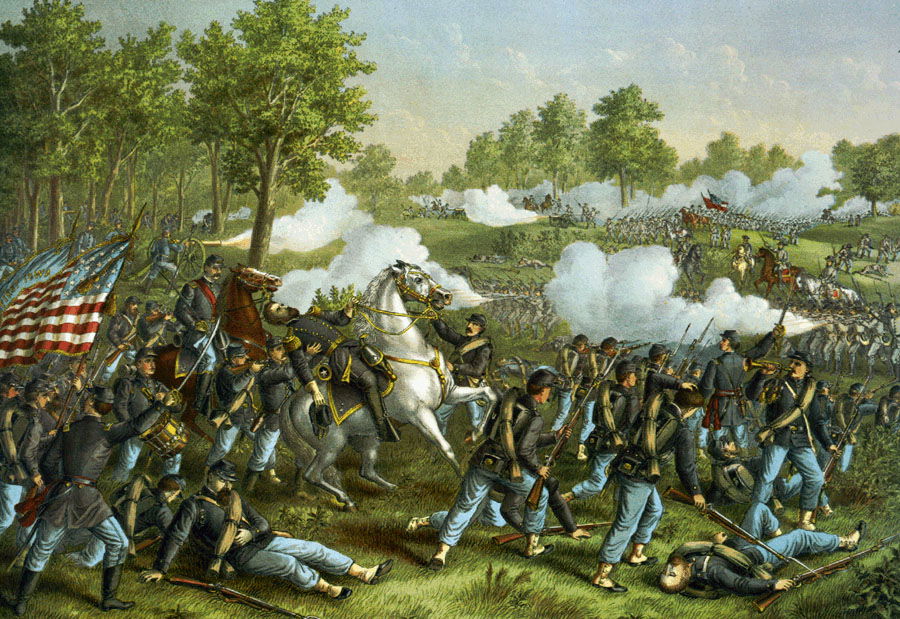
More than 600,000 soldiers died, making it the deadliest war in American history—more than all other U.S. wars combined up to that point.
When the War Changed Its Purpose
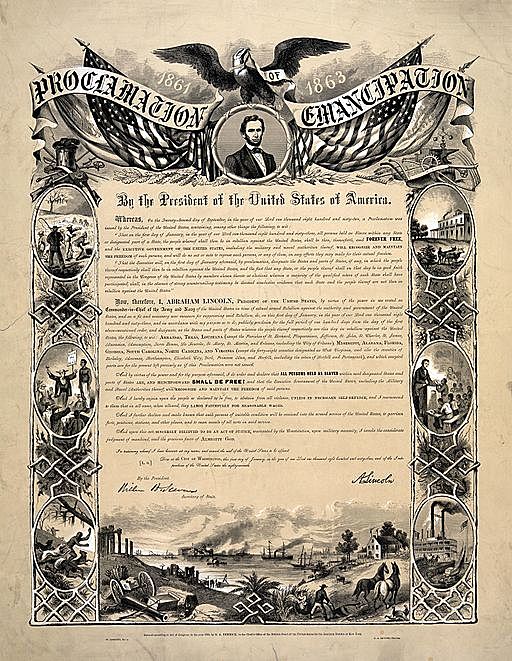
As the war progressed, Lincoln concluded that slavery could not survive if the Union was to survive.
In 1863, he issued the Emancipation Proclamation, which:
Declared freedom for enslaved people in Confederate states
Reframed the war as a moral struggle
Prevented foreign powers from supporting the Confederacy
This was a strategic and ethical turning point.
The war was no longer only about unity—it became inseparable from freedom.
African Americans and the War
Nearly 200,000 African Americans served in the Union Army and Navy.
Their contribution:
Strengthened the Union military
Undermined the Southern labor system
Challenged racist assumptions
Despite their service, equality did not follow immediately.
This gap between sacrifice and reward remains one of the war’s most painful legacies.
The End of the Confederacy
In April 1865, Confederate General Robert E. Lee surrendered at Appomattox Court House.
The war was over—but peace was fragile.
Just days later, Lincoln was assassinated, leaving Reconstruction without its primary architect.
Reconstruction: The Missed Opportunity
Reconstruction aimed to rebuild the South and integrate formerly enslaved people into American society.
It achieved some progress:
Constitutional amendments abolishing slavery
Citizenship and voting rights
But it failed to:
Protect African Americans from violence
Prevent the rise of segregation laws
Enforce equality consistently
This failure allowed racial injustice to persist for generations.
Myths the War Created
Several narratives emerged after the war that distorted its meaning:
The “Lost Cause” myth portrayed the Confederacy as noble
Slavery was downplayed as a cause
Confederate leaders were romanticized
These myths influenced textbooks, monuments, and public memory for decades.
Understanding the Civil War requires separating history from storytelling.
Why the American Civil War Still Matters
The Civil War’s legacy lives on in:
Federal vs state authority debates
Racial inequality discussions
Political polarization
Constitutional interpretation
The war settled the question of national unity—but not the meaning of equality.
The Truth History Books Often Skip
The American Civil War was not simple.
It was:
A moral conflict over slavery
A political struggle for power
An economic battle between systems
A constitutional crisis
A human tragedy on a massive scale
Reducing it to a single cause makes it easier to teach—but harder to understand.
Final Reflection
History becomes dangerous when simplified.
The American Civil War teaches us that unresolved injustice, ignored fear, and political compromise without moral clarity can eventually lead to violence.
Understanding what textbooks skip is not about rewriting history—it is about completing it.


